Paint correction is the process of mechanically polishing a vehicle's clear coat to remove swirl marks, scratches, oxidation, water spots, and other surface defects, restoring the paint to a level of gloss and depth that often exceeds factory condition. Unlike waxing or ceramic coating, which add layers on top of existing paint, paint correction permanently removes imperfections by leveling microscopic amounts of clear coat.
If your car's paint looks dull, has visible swirl marks in direct sunlight, or shows fine scratches from automatic car washes, professional paint correction can bring it back. This guide explains what to expect from paint correction, how the process works, what paint correction services cost, how long it takes, and whether paint correction is worth the investment for your vehicle.
What Is Paint Correction?
Paint correction is the process of mechanically polishing a vehicle's clear coat to remove surface defects. These defects include swirl marks, fine scratches, water spots, oxidation, holograms from poor previous polishing, and etching from bird droppings or tree sap.
The key word is "remove." Paint correction does not mask imperfections. It physically removes a controlled amount of clear coat to create a smooth, flat surface that reflects light evenly. The result is deeper color, sharper reflections, and a finish that looks better than showroom condition.
What Does Car Paint Correction Include?
A full car paint correction service is much more than a single machine polish. Professional paint corrections start with a thorough decontamination wash to lift loose dirt and road film, followed by an iron remover to dissolve brake dust and industrial fallout embedded in the clear coat. A clay bar or clay mitt treatment then pulls out any remaining bonded contaminants so the polishing stages work on a clean, smooth surface.
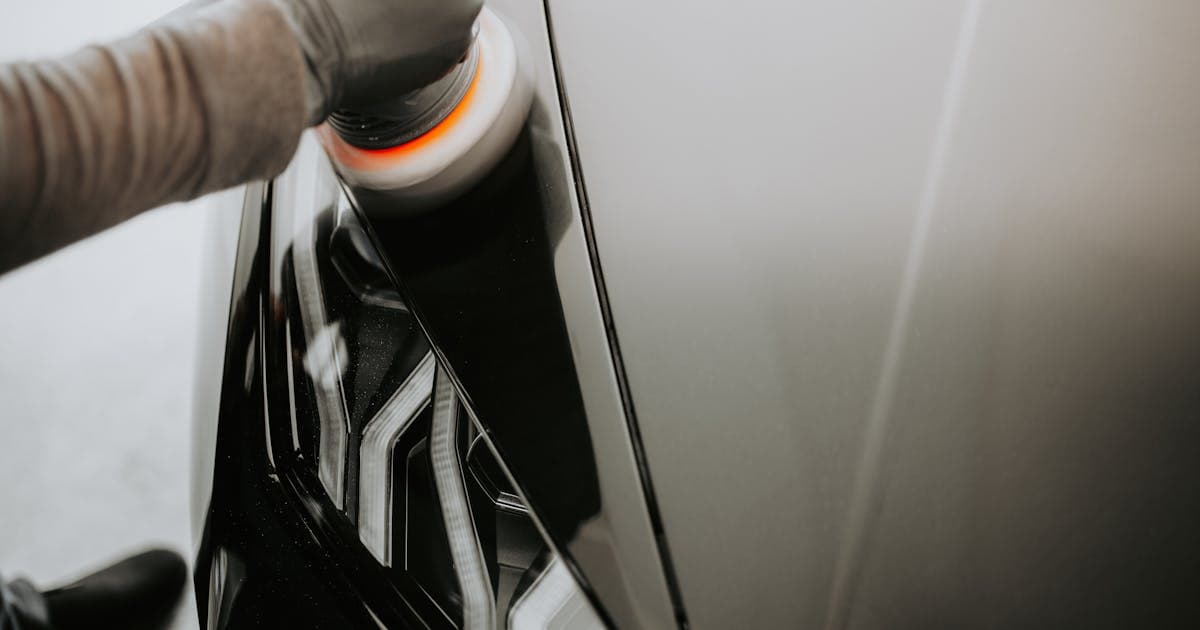
Once the paint is decontaminated, the detailer inspects every panel under direct lighting to measure defect severity and check paint thickness with a gauge. The polishing stages follow, using dual-action or rotary polishers with graduated cutting and finishing pads. The final steps include an isopropyl alcohol wipedown to strip polishing oils and reveal the true finish, then optional protection like a sealant, wax, or ceramic coating so the corrected paint stays protected for years. Every step of the paint correction process is documented so you can see the before and after results.
Common Paint Defects
Understanding what causes paint defects helps you prevent them in the future.
- Swirl marks: Fine circular scratches caused by automatic car washes, improper washing technique, or dirty towels
- Scratches: Deeper marks from keys, branches, fingernails, or contact with other objects
- Water spots: Mineral deposits left behind when water evaporates on the surface, especially in areas with hard water
- Oxidation: A chalky, faded appearance caused by prolonged UV exposure breaking down the clear coat
- Holograms: Cloudy patterns caused by incorrect machine polishing technique or using the wrong products
- Etching: Chemical damage from bird droppings, tree sap, or insect remains that eat into the clear coat
Stages of Paint Correction
Paint correction is categorized by stages, each representing an increasing level of defect removal. The right stage for your vehicle depends on the severity of the damage.
1-Step (Single Stage) Correction
A single-step correction uses one round of machine polishing with a medium-cut compound and polishing pad. This is suitable for vehicles with light swirl marks and minor surface imperfections. It typically removes around 50 percent of visible defects and adds significant gloss.
1-step correction is a good option for relatively new vehicles that have been through automatic car washes a few times, or vehicles that just need a refresh before applying ceramic coating.
2-Step Correction
A two-step correction involves a cutting (compounding) stage followed by a refining (polishing) stage. The first pass uses a more aggressive compound to remove deeper scratches and heavier swirl marks. The second pass uses a finer polish to refine the surface, remove any haze left by the compounding, and maximize gloss.
This is the most common level of correction for vehicles with moderate defects. It typically removes around 85 percent of paint imperfections and delivers a dramatic improvement in clarity and depth.
3-Step (Multi-Stage) Correction
A three-step correction adds an additional compounding or intermediate polishing stage for vehicles with severe defects. This process chases out all correctable defects for a 95 percent or greater defect-free finish.
3-step correction is reserved for vehicles with heavy swirl marks, deep scratches, significant oxidation, or poorly maintained paint that needs complete restoration. It is the most time-intensive option but delivers the most dramatic results.
Tools and Products Used
Professional paint correction requires specialized equipment. At Gunn Cleaning Service, we use Rupes and Flex polishers, which are among the most respected tools in the detailing industry. For compounds and polishes, we use Koch Chemie, a German-made product line known for consistent cut and finish quality.
The choice of polishing pad matters as much as the compound. We use a range of pads from aggressive cutting pads (microfiber and wool) to soft finishing pads (foam) depending on the correction stage and the hardness of the paint system.
How Long Does Paint Correction Take?
Paint correction is not a quick process. Proper correction requires time, precision, and attention to every panel of the vehicle.
- 1-step correction: 3 to 5 hours
- 2-step correction: 6 to 10 hours
- 3-step correction: 10 to 16+ hours
Should You Get Paint Correction Before Ceramic Coating?
Yes. Ceramic coating locks in whatever is underneath it. If you apply ceramic coating over swirl marks and scratches, those defects are sealed under the coating and become much harder to address later. Paint correction before coating ensures you are protecting a clean, defect-free surface.
Every ceramic coating application at Gunn Cleaning Service includes paint correction as part of the preparation process. We never apply coating over uncorrected paint.
How to Tell If Your Car Needs Paint Correction
The easiest test is to look at your paint in direct sunlight. If you see spiderweb-like swirl marks, scratches, or a hazy appearance instead of sharp reflections, your paint would benefit from correction. Run your hand over a clean panel. If it feels rough or textured rather than glass-smooth, there are likely embedded contaminants or surface defects that need attention.
If you are in the Vancouver or Lower Mainland area, contact Gunn Cleaning Service for a free assessment. We will evaluate your paint condition and recommend the right level of correction for your vehicle.
How Much Does Paint Correction Cost?
Paint correction pricing varies based on vehicle size, paint condition, and how many stages of correction are needed. A single-stage paint correction on a standard sedan typically runs $400 to $700. A 2-step paint correction for moderate defects usually lands between $800 and $1,400. Multi-stage paint corrections on larger SUVs, trucks, or vehicles with severe swirl marks and scratches can range from $1,500 to $3,000 or more.
Cost depends on the hours of labour involved, the hardness of the paint system, and whether the job includes ceramic coating on top. We always quote paint correction services after a free in-person inspection so you know exactly what the work involves and what the finished result will look like. Every estimate includes the decontamination, machine polishing, and final wipedown stages.
Is Paint Correction Worth It?
For most vehicle owners, yes. Paint correction is worth the investment when your paint is the original factory finish, when you plan to keep the vehicle long-term, or when you are about to apply a ceramic coating that needs a defect-free surface to bond to. A corrected and coated vehicle stays glossier, easier to wash, and more resistant to future damage than one that has simply been waxed over existing defects.
Paint correction also preserves resale value. Buyers notice a paint finish that looks deep and sharp, and they pay more for a well-maintained vehicle. If you are restoring an older car, recovering from poor previous detailing, or prepping for a sale, paint correction services deliver measurable value. The main case against paint correction is on lease vehicles you plan to turn in within a year, where wax or a short-term sealant may be more economical.
Paint Correction vs Polishing vs Buffing
Paint correction, polishing, and buffing are often used interchangeably, but they describe different things. Buffing is a general term for any machine-driven process that rubs a product against paint. Most retail buffing services are single-pass jobs using an all-in-one cleaner wax, which hides defects temporarily rather than removing them.
Polishing is more specific and refers to using a finer abrasive product, usually after a cutting stage, to refine the paint and maximize gloss. Polishing alone is not the same as paint correction because it will not remove deeper swirl marks or scratches. Paint correction is the complete, measured process of removing defects in graduated stages, verified under inspection lighting, with the goal of a truly corrected finish rather than a cosmetic cover-up. When you compare paint correction vs polishing vs buffing, paint correction is the gold standard because it actually fixes the paint instead of masking the damage.
Paint Correction Near Me, Lower Mainland
If you are searching for paint correction near you in the Lower Mainland, Gunn Cleaning Service provides mobile paint correction across Vancouver, Burnaby, Surrey, Coquitlam, Richmond, Langley, North Vancouver, West Vancouver, New Westminster, Port Coquitlam, Port Moody, Delta, White Rock, Maple Ridge, Pitt Meadows, Abbotsford, Mission, Chilliwack, and every community in between. Our mobile rig is fully self-contained, so we can perform car paint correction at your home, condo parkade, or workplace.
Because we are mobile, you do not need to drive a freshly corrected car home through rain and road grime. We finish on site, apply protection, and hand the vehicle back ready to enjoy. Contact us to book a free paint inspection and quote for paint correction services anywhere in the Lower Mainland.
Can Paint Correction Remove Deep Scratches?
Paint correction can remove or dramatically reduce any scratch that sits entirely within the clear coat. You can often tell by running a fingernail across the scratch. If your nail does not catch, the scratch is usually correctable through multi-stage polishing. Scratches that have broken through the clear coat and reached the base coat or primer cannot be polished out and need touch-up paint or a paint booth repair.
For deeper swirl marks and random isolated scratches, a 2-step or 3-step paint correction delivers the best results. We inspect every panel before quoting so you know which defects will fully disappear and which ones may only be reduced.
How Often Should I Get Paint Correction?
Paint correction is not meant to be a routine service. Because each correction removes a small amount of clear coat, most vehicles should only receive a full multi-stage paint correction every several years, or once before applying a long-term ceramic coating. Maintenance polishing with a very fine polish can be done annually to refresh gloss without significantly reducing clear coat thickness.
If you protect your vehicle with ceramic coating and wash it properly, you may never need another full paint correction for the life of the car. Good washing technique, two-bucket method, and avoiding automatic brush washes prevent the swirl marks that trigger the need for correction in the first place.
Will Paint Correction Damage My Clear Coat?
Professional paint correction is safe when done properly. Every clear coat has a finite thickness, typically 40 to 60 microns on a factory car, and machine polishing removes a very small fraction, usually 2 to 5 microns per stage. A trained detailer measures clear coat thickness before and during the job to make sure enough material remains for future maintenance polishing.
The risk comes from inexperienced operators using aggressive pads, wrong products, or too much pressure. That is when you see burn-through, holograms, and uneven gloss. At Gunn Cleaning Service we use paint thickness gauges, test spots, and calibrated polishing speeds on every paint correction to ensure your clear coat is protected.
Do I Need Paint Correction Before Ceramic Coating?
Yes, in almost every case. Ceramic coating locks in whatever is underneath it, so any swirl marks, scratches, or oxidation present before coating are sealed in for the life of the coating. Without paint correction beforehand, you are protecting the defects instead of protecting the paint, and the finish will look worse under the glossy coating than it did without it.
Every ceramic coating application at Gunn Cleaning Service includes paint correction as part of the preparation. Depending on the condition of the paint, that may be a single-stage enhancement polish on a new car or a full multi-stage paint correction on an older vehicle.
What Is the Difference Between Stage 1 and Stage 2 Paint Correction?
Stage 1 paint correction is a single pass of machine polishing, usually with a medium-cut compound on a medium pad. It removes roughly 50 to 70 percent of light defects and delivers a noticeable gloss boost. Stage 1 is ideal for newer vehicles with minor swirl marks or as paint prep before a ceramic coating on paint that is in good condition.
Stage 2 paint correction adds a second, finer polishing pass after the initial cut. The first pass removes deeper swirl marks and scratches, and the second refines the surface to remove any haze or micro-marring left behind, maximizing clarity and depth. Stage 2 typically removes 80 to 90 percent of defects and is the standard for vehicles with moderate paint damage or darker colours where every micro-scratch shows up under sunlight.
Photo by Luke Miller on Pexels