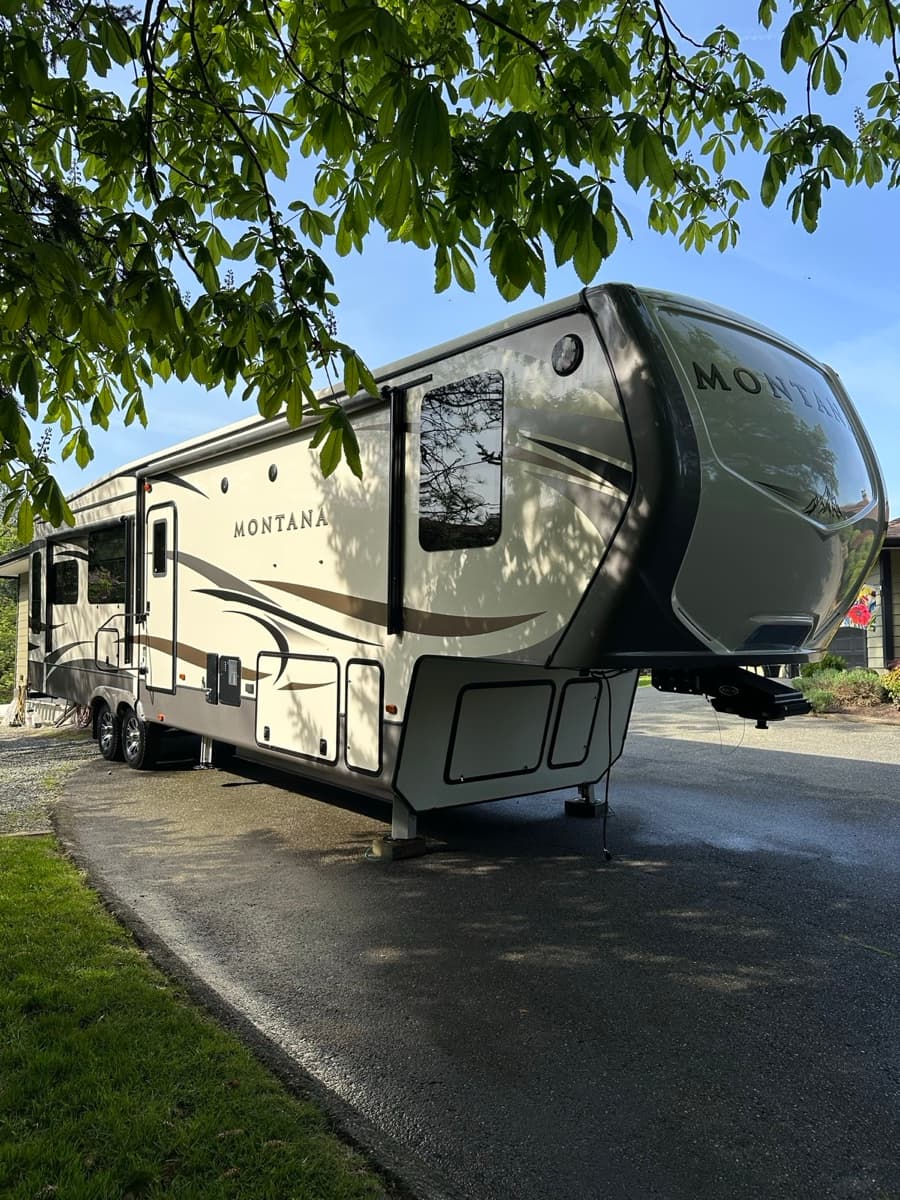
Boats and RVs are not just larger cars. Most are finished in gelcoat, a pigmented polyester resin that is far thicker than automotive clear coat but considerably more porous, and it fails differently. Instead of dulling gradually, gelcoat oxidises into a chalky surface layer that transfers onto your hand when you touch it.
That difference drives everything else about the process: the compounds used, how much correction is possible, and above all what has to go on afterwards to keep the result.
Gelcoat oxidation, and why it chalks
Ultraviolet light breaks down the resin at the surface of gelcoat and leaves the pigment behind as loose powder. Run a finger down a neglected hull or the side of an older trailer and it comes away white. That chalk is the finish itself, degraded.
The good news is that gelcoat is thick enough to work with. Compounding removes the oxidised layer and exposes sound resin underneath, which is why a hull that looks beyond saving often comes back to a genuine gloss. The catch is what that leaves behind: freshly cut gelcoat is porous and completely unprotected, and if it is not sealed it will oxidise again faster than it did the first time.
This is the step that separates a detail that lasts a season from one that lasts a week. Sealing after compounding is not optional on gelcoat the way skipping wax on a car merely shortens protection.
What each surface actually needs
A boat and an RV are both collections of different materials, and treating them uniformly is how damage happens. The panels that look similar often are not.
| Surface | What goes wrong | Treatment |
|---|---|---|
| Gelcoat hull and sides | UV oxidation, chalking, loss of gloss | Compound to remove the oxidised layer, polish, then seal or coat |
| Hull below the waterline | Staining from waterline scum and mineral deposits | Dedicated hull cleaner rather than abrasive work |
| RV rubber roof | Degrades and sheds, producing the streaks below it | Cleaner formulated for EPDM, never petroleum-based products |
| Decals and graphics | Fade, lift at the edges, thin under aggressive polishing | Hand work around edges, no heavy machine compounding over them |
| Vinyl seating and canvas | Mildew in damp storage, UV cracking | Cleaned and treated with a UV protectant, dried fully before covering |
| Aluminium trim and rails | Pitting and oxidation, worse near salt water | Metal polish, then sealed to slow it returning |
Where RV black streaks actually come from
The vertical black streaks running down the sides of almost every older RV are not road dirt. They are runoff from the roof. Rubber roofing degrades under UV and sheds a fine black residue, and every rainfall carries that residue over the edge and down the walls, where it stains.
Which means scrubbing the sides treats the symptom. The streaks come back after the next rain unless the roof is cleaned as part of the job. It is also why RV roofs need a cleaner made for EPDM rubber rather than whatever is in the garage. Petroleum-based products break the membrane down faster, accelerating exactly the problem you are trying to solve.
Salt water, fresh water, and Lower Mainland conditions
Boats here see both, and each leaves its own problem. Salt water accelerates corrosion on every fastener, rail and fitting, and salt left to dry keeps drawing moisture long after the boat is out of the water. Fresh water from the Fraser and the interior lakes carries minerals that leave water spots which etch into gelcoat if they sit in the sun.
Both come down to the same habit: rinse and dry after use rather than letting either dry in place. And for boats kept on trailers through a coastal winter, moisture trapped under a cover is what produces the mildew found in the spring, so anything cleaned needs to be fully dry before it is covered.
Ceramic coating on gelcoat
Coating a boat or RV makes more sense than coating a car, for a simple reason: these are the vehicles that sit outdoors, uncovered, in full sun, for months at a time, with no garage in the picture. That is precisely the exposure a coating is designed for.
Coated gelcoat also cleans dramatically more easily. Waterline scum and roof runoff have far less to bond to, so seasonal cleaning becomes a rinse rather than a scrub. The preparation is the same principle as on a car, only more so: compound and polish first, because a coating over oxidised gelcoat seals the chalk in.
Related: ceramic coating service · ceramic coating vs wax
When to book
Two windows matter in this climate. Spring, before the boat goes back in the water or the RV goes out for the season, is when compounding and sealing pay off most, because the protection is going on ahead of the months of UV exposure rather than after them.
Autumn matters for a different reason. Anything going into winter storage should go in clean and dry, with vinyl and canvas treated and fully dried. Mildew found in April almost always grew from moisture that was covered up in October.
Why this work is mobile by necessity
A boat on a trailer, a fifth-wheel or a motorhome does not fit in a detailing bay, and moving one to a shop is a job in itself. So these are done where they are parked: on the driveway, in the yard, at the storage compound.
That suits how the properties out here are laid out. Through Delta, Langley, Maple Ridge and the Fraser Valley there is usually room to work all the way around a boat or an RV without moving anything, which is where a good share of our marine and RV work happens.
We detail boats, RVs and aircraft alongside cars across the Lower Mainland, from Agassiz to West Vancouver. Call or text 778-255-4161 with the size and current condition and we will give you a straight estimate.
Related: mobile vs shop detailing · areas we serve
Frequently Asked Questions
Can oxidised gelcoat be restored?
In most cases yes. Compounding removes the chalky oxidised layer and exposes sound gelcoat underneath. The surface must then be sealed, because freshly cut gelcoat is porous and will oxidise again quickly if left bare.
What causes the black streaks on the sides of an RV?
Runoff from a degrading rubber roof. Rain carries the residue over the edge and down the walls, so cleaning the roof is the part that stops the streaks returning.
Is boat detailing different from car detailing?
Yes. Gelcoat is thicker but far more porous than automotive clear coat, it chalks rather than simply dulling, and it must be sealed after compounding. Boats also have surfaces cars do not, including canvas, vinyl seating and below-waterline staining.
Is ceramic coating worth it on a boat or RV?
Often more so than on a car, because these vehicles live outdoors in full sun with no garage. A coating slows oxidation and makes seasonal cleaning far easier, provided the gelcoat is compounded and polished first.
When is the best time to detail a boat or RV?
Spring, before the season starts, so protection goes on ahead of the UV exposure. Autumn matters too, since anything going into winter storage should be clean and fully dry before it is covered.
Do you come to where the boat or RV is parked?
Yes. These are mobile-only jobs in practice, so we work at your driveway, property or storage compound anywhere in our Lower Mainland service area.
Photo by GunnCleaningService